

Gettin' Busy (FREE)
Work, watering, wellbeing
Working. Stiff.
Before I wanted to be a gardener but after I wanted to be a barrister I wanted to be an interior designer.
I have a sort of crazed obsession with fabrics and wallpapers in particular, and loved the idea of playing around with samples all day. Not to mention the Tetris of floor-plans, the thundering bloodlust of antique hunting, and the thrill of seeing a plain old room become an environment.
Ultimately though only about 10% of any ‘creative job’ is actually creative. The other 90% - like every professional role - is admin.1
Not to mention the clients.
It was one thing to work with clients going through the horrors of the family law system - they had reason to be furious, anxious, traumatised, upset, even demanding. But could I really, honestly have gone to the mat over this or that pillow sham? Could I have dealt with a client upset about e.g. the trim on a chair, with a straight face?
In the end, I felt that no, I could not.
I still love playing around with interior design when I get the chance. A friend who recently moved into her first flat tout seul has had the benefit of my many, many, many costly mistakes by way of advice and doodled floor plans.
But over the last few days I have been doodling for actual work. I know, I can’t believe it either.
Yes, my first professional gig as a garden designer has begun and it is… terrifying. That old familiar feeling - the feeling of being an utter fraud, you know the one - has been present in every moment. The feeling of having ‘INCOMPETENT’ written across one’s forehead.
Crippling self-doubt aside, it has been wonderful. I love working! It is my toxic trait (one among many).
When I did the ‘So You Want to be a Garden Designer’ course back in August 2024, I left thinking very clearly ‘No. No, I do not’. Apart from anything else the course was almost entirely about hardstanding and I’m just not that interested in the nuances of concrete.
But that was then.
I learned this week that I have very strong views about hardstand. I also have very strong views about fencing. Fencing!
I can’t tell you the fun I’ve had putting together sketches and ideas. Has it also made me cripplingly paranoid about my almost complete innumeracy as I checked and checked and checked again the measurements on each plan? SURE. But what fun!
And as for the clients? Well, they want to have a lovely garden! What a difference it makes to be working with clients towards something intended to bring joy; a place for fun, for family. I always felt heavily the burden of a career dealing in misery. But not now.
That said, today I did spend a whole day sitting at a desk! This ought not to feel foreign - it is how I spent every working day of my life from ages 4 to 34 - but it is. It felt foreign, and it felt great.
These are long-atrophied muscles - the ones that strain and heave wanting every detail, every word, everything to be perfect - they are stiff. But as I sit at my desk and write emails and navigate work again, I feel them slowly groaning back to life.
Back to School?
I haven’t wanted to formally train in garden design. I really, really haven’t. I wrote early on about being proudly untrained. But it has just been announced that Jo Thompson has been appointed Head of Garden Design Studies at the London College of Garden Design.
Beth Chatto wrote in a letter to Christopher Lloyd, when musing on the ignorance (my word) of horticultural students she meets:2
“Are horticultural establishments too much occupied with principles, economics, government regulations and the latest fads and fashions of hard landscaping, leaving the students to discover for themselves the vocabulary of garden design?”
I think they are.
When I did the ‘So You Want To Be A Garden Designer’ course at RHS Wisley two years ago the whole day was spent talking (it seemed) about hardstanding. I raised my hand at the end and asked, essentially, ‘what about plants?’ The speaker suggested perhaps a specialist ‘planting design’ course would be appropriate.
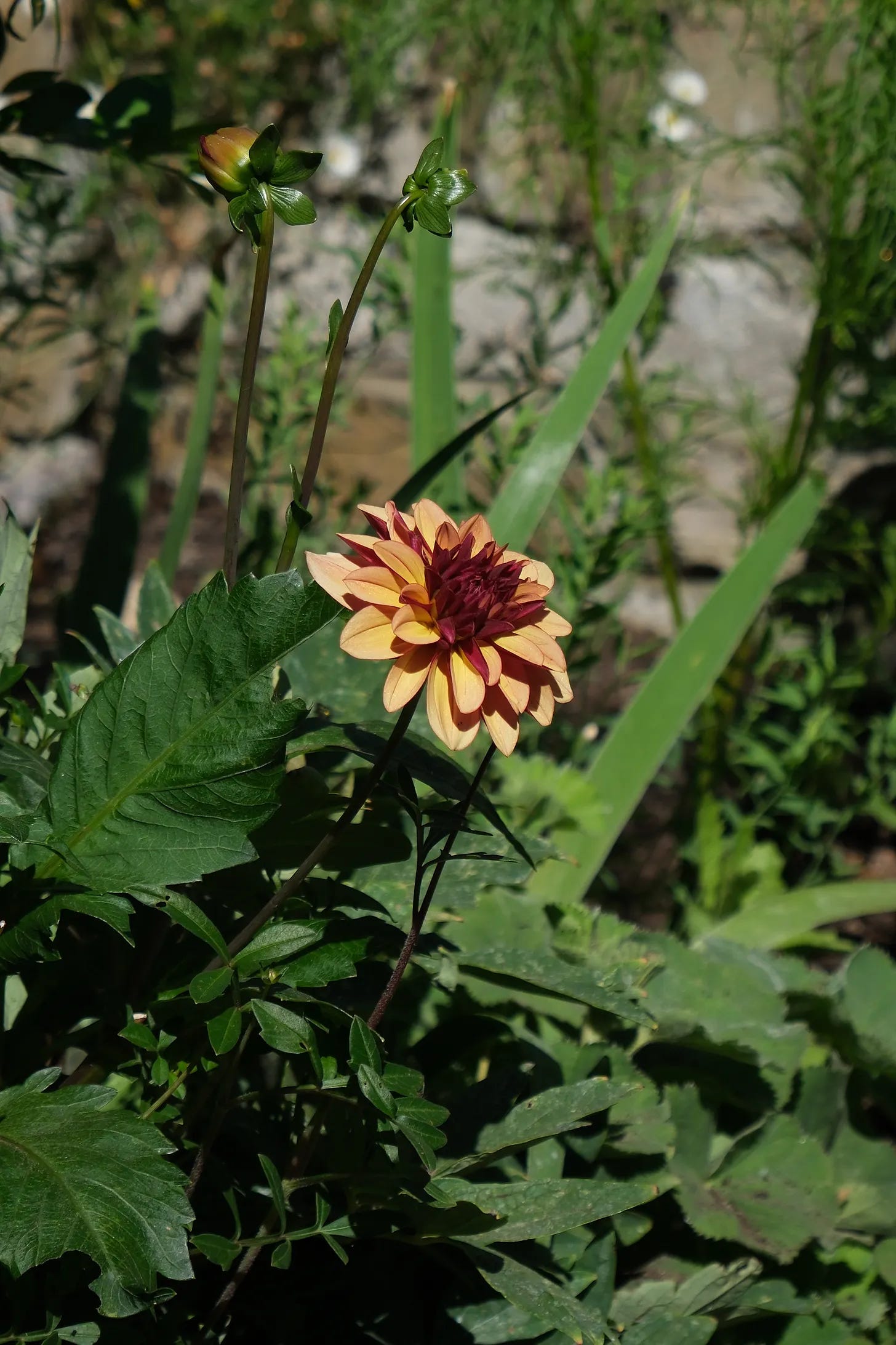
But I learn every day, in my own way, about plants. By interacting with them, by being fascinated by them, by reading about them and visiting them - by really seeing them!
All of that said - can you imagine having Jo as a teacher? And you’re designing gardens together? What an incredible opportunity to learn from one of the best garden designers of our time. I could listen to Jo talk about concrete all day long.
I’m seriously thinking of applying.
I, Watering
I have been desperately trying to find a passage I read somewhere about watering a garden. I have asked around, I have even asked ChatGPT. No luck.
Then I remembered the proverb: “The best fertiliser is the gardener's shadow”.
I discussed with my clients (clients!!) the options available for irrigation systems. Slow-drip systems off-the-shelf, or clever, wired-in systems that are controlled by pressing buttons on a doodad on the wall.
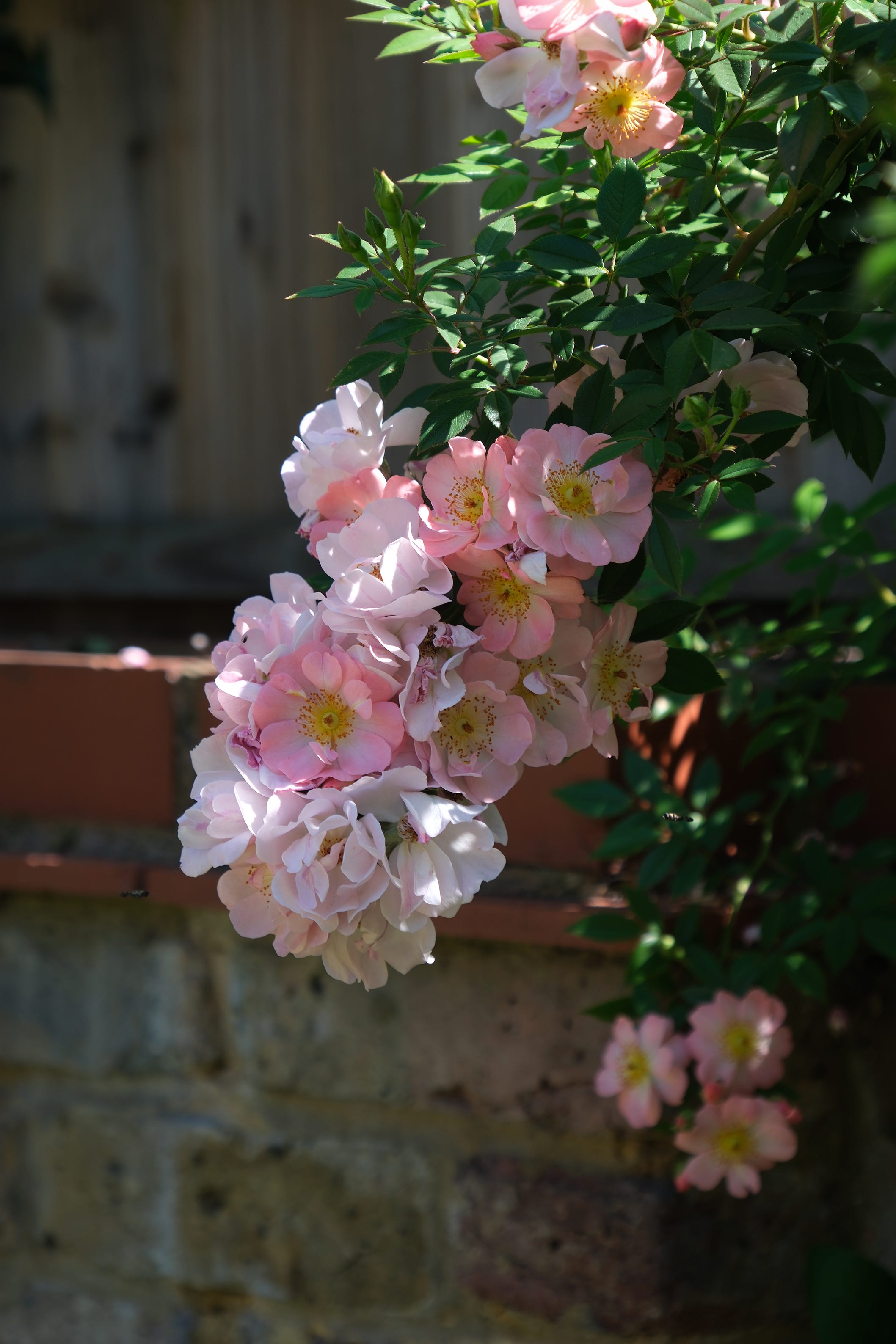
In England we are all suffering under a hosepipe ban at the moment. It is awful.
It is not as awful as those fleeing from wildfires sweeping across France and Spain, and elsewhere. Of course it isn’t. In fact it is a miracle that we haven’t seen worse wildfires here given every blade of grass stands, brown as a matchstick, ready to rage at the hint of a spark.
Christopher Lloyd wrote in a letter to Beth Chatto on the subject of watering during a drought (yes, I recently re-read the book - I thought my missing quote might be in there):3
“My own feeling is that principles can go too far. THEY GET IN THE WAY. Obviously I’m not such a moral person as you. But when I see plants suffering, it’s like having a pet animal that you’ve neglected to feed. But the animal will touch your heart by mewing or whining. The poor plant cannot do that […] I think that a point should come when one feels strong (not weak) enough to face the facts. It is your garden; they are your plants. When they are happy, you are happy.”
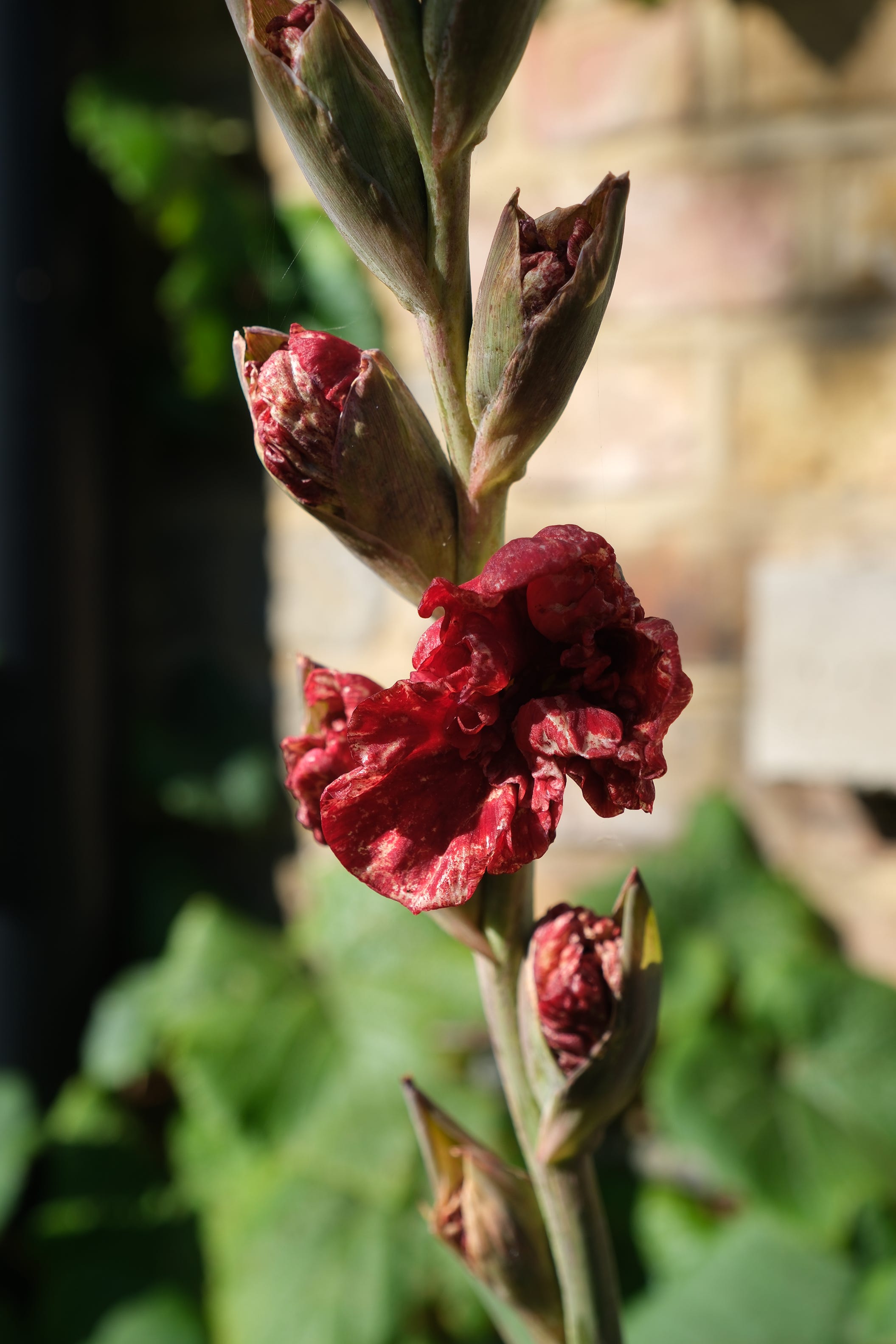
Beth wrote back that while she does “not disapprove of all watering. That would be hypocritical” she bases her thinking on “the assumption that water is our most precious commodity as the world population continues to explode, and modern demands for water are often in excess of actual need”. 4
In her book ‘A Garden Against Time’, Olivia Laing writes:5
"By August we were officially in drought […] My dominant feeling during those rainless weeks was a kind of listless horror. The plants were dying and I could choose to water, since water was still coming out of the tap, as long as I chose to disregard the consequences, the rivers that were drying up by the day […] I couldn’t bear to water my garden, to make my piece of land more important than any other, and I also couldn’t bear to see the plants I’d cherished die”
Somewhere it is written (and I really have tried to find where!) that the act of hand-watering a garden is how we, as gardeners, come to know and understand, to enjoy and to appreciate our plants. It is how we tend. We pass our shadow over our garden each day (or as needed) and our attention, our gaze, our noticing, our seeing is the proverbial fertiliser.
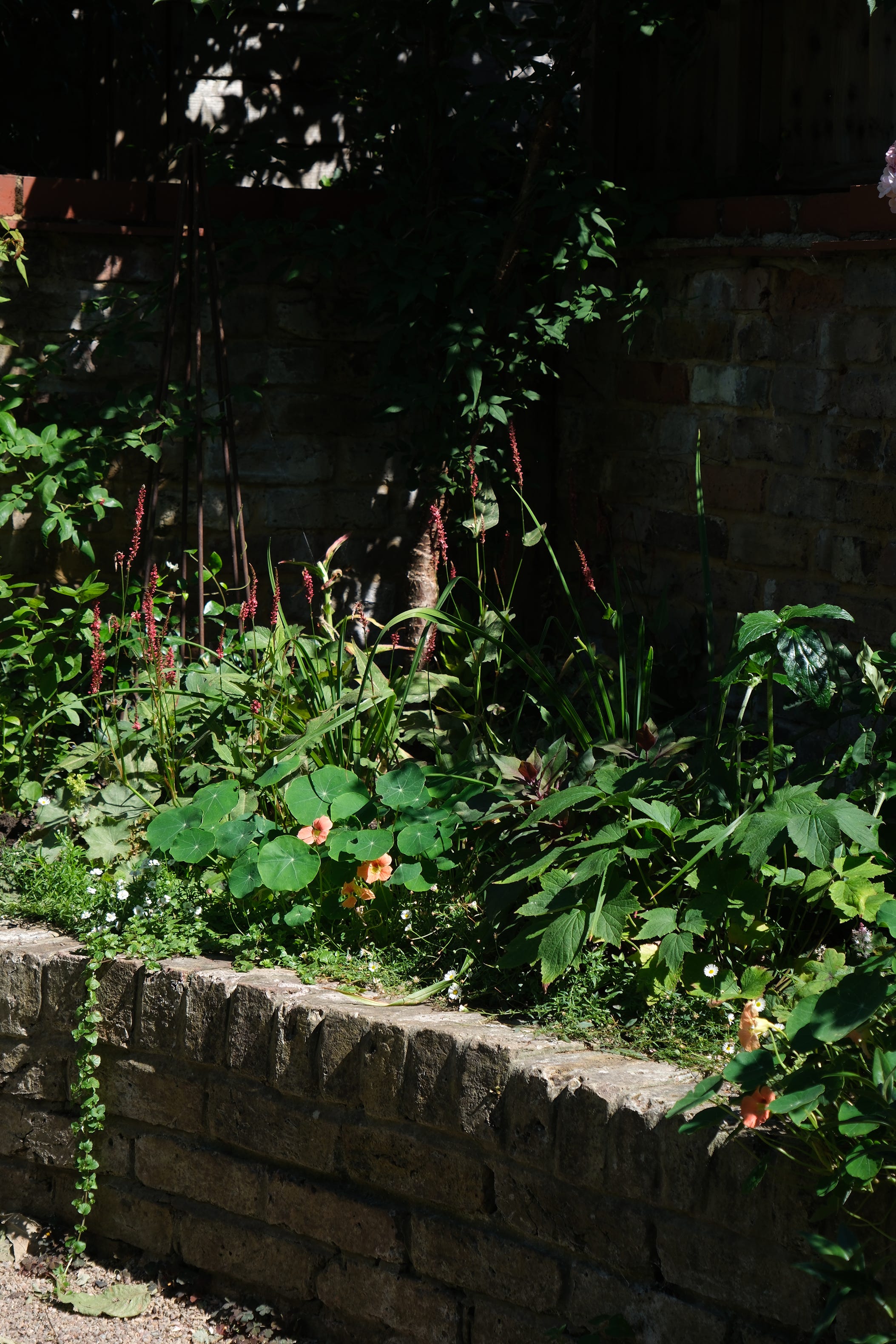
Of course, the water itself is good, too. It’s pretty essential, actually.
My moral panic, and my desire to see my garden flourish and flower, are in a battle to the death.
Not two days before the official hosepipe ban came in, one of my neighbours was pressure washing his car. His CAR.
HIS CAR DOES NOT NEED WATERING. CROPS DO. PLANTS DO. PEOPLE DO.
My garden is so full of life now. Flurries of butterflies, bees, and things I don’t recognise swirling around. As the Heathrow flights groan and roar overhead, my garden’s flightpaths are frantic.
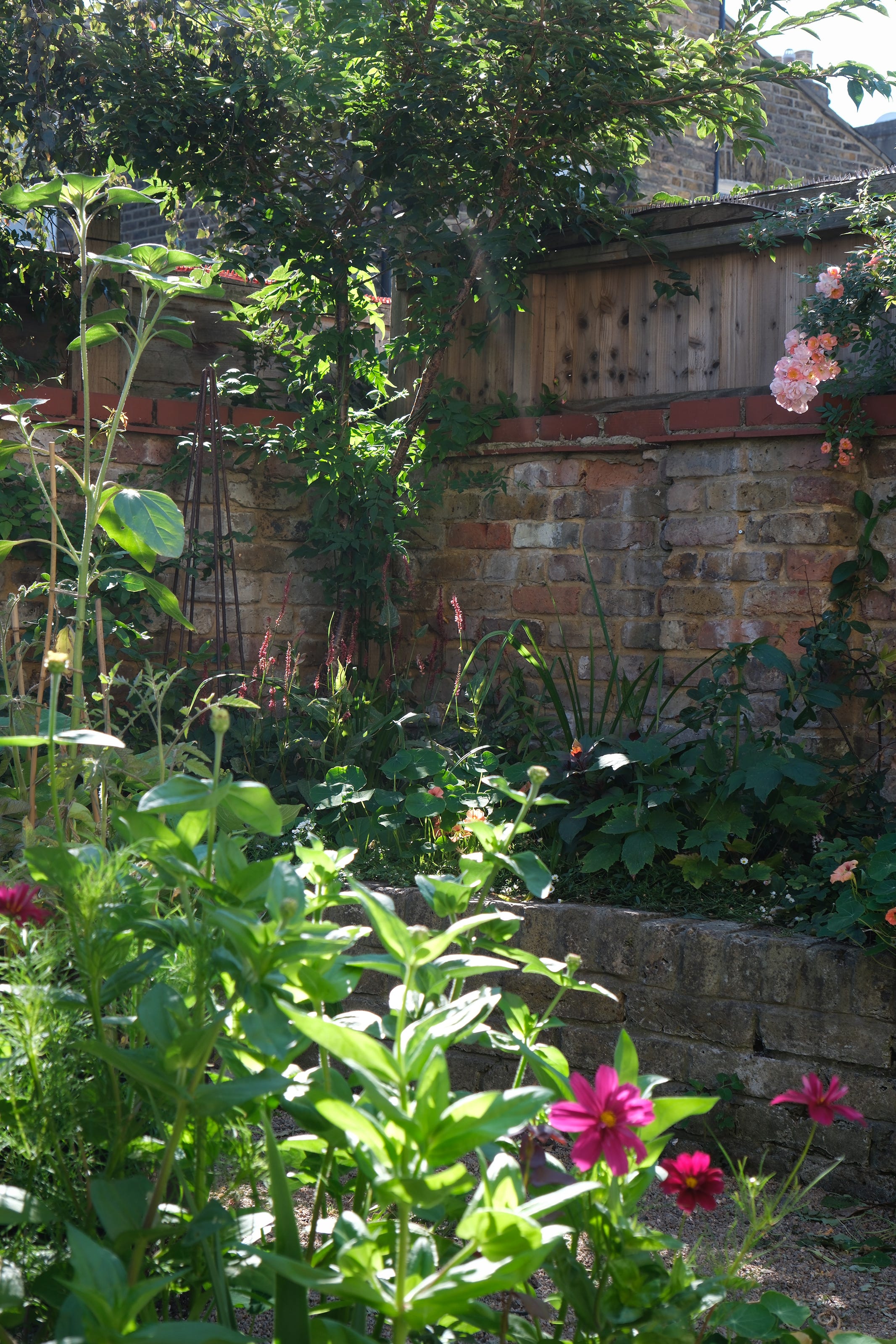
I nurture this garden not only for me, but for all the other lives lived there. Even the fucking sawfly larvae (ok, fine, yes I’ve been killing them as often as possible).
I know my footprint on this earth is modest. I don’t fly. Since moving to the Barn I have reduced my showering to, like, once a week (damp towels more often, of course - nothing wrong with a whore’s bath. But how do my feet always end up so dirty? I swear before I took up gardening my feet were never once dirty. Now I have the feet of an orphaned Victorian street urchin).
So why can I not keep my garden alive? Why is it a blanket ban with some hard-to-navigate exceptions that differ from one water company to the next?
Of course no one needs to wash their car, for fuck’s sake. And of course no one needs to water their lawn. But what of this garden, so carefully nurtured, so thoughtfully curated, so expensively planted, so lush and full of life?
And what if my garden is part of the critical infrastructure of my wellbeing? Then what?
Sue Stuart Smith writes in ‘The Well Gardened Mind’6:
“In my mid-thirties, working as a junior psychiatrist for the NHS […] I discovered the pleasures of wandering through the garden with a free-floating attention, registering how the plants were changing, growing, ailing, fruiting. Gradually the way I thought about mundane tasks such as weeding, hoeing and watering changed; I came to see that it is important not so much to get them done, but to let oneself be fully involved in the doing of them. Watering is calming - as long as you are not in a hurry - and, strangely, when it is finished, you end up feeling refreshed, like the plants themselves.”
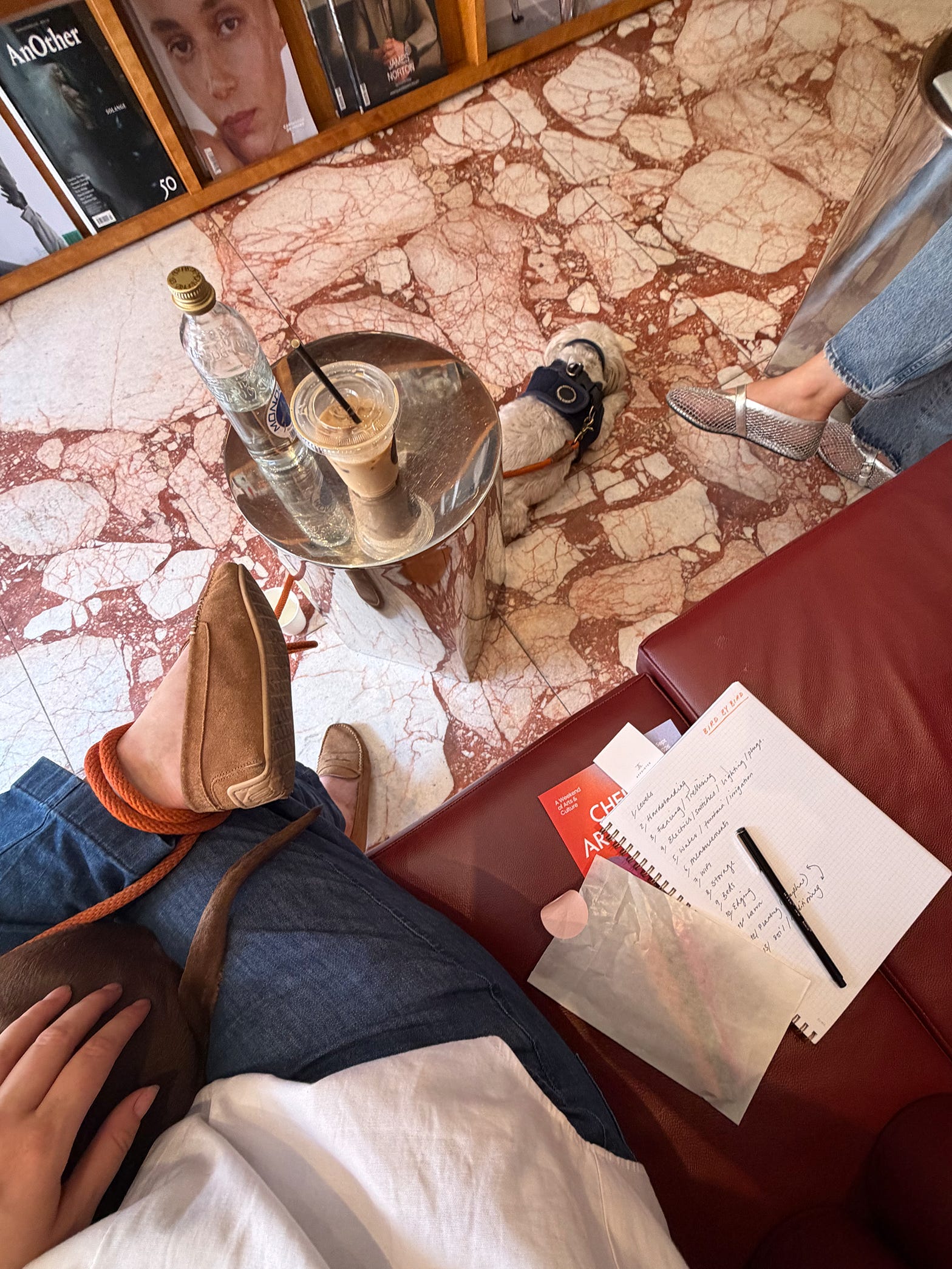
Perhaps Olivia Laing is right and that the sacrifice must be universal. But is my piece of land not more important than others? Why can’t everyone just stop showering twice a day? You don’t need to wash your hair all the time! Why can’t that guy go to JAIL for washing his stupid car in the third heatwave of the hottest summer ever? Ffs.
That said, to water with a watering can is to be more intimate with our plants. To get closer. To really see.
A friend of mine - a brilliant classicist - said the most beautiful thing about Christopher Nolan’s ‘The Odyssey’ (you only think you’ve read every ‘take’, but this is actually The Take). She wrote:
“Was it entirely faithful to Homer’s version? Lol no.
Were there some bits which felt a bit schmaltzy/Hollywoody? Yes.
BUT was it moving to be sitting there in a packed cinema watching a story that people have been hearing/reading for nearly 3,000 years which covers timeless themes and realising that humanity has that connection across time and space, and thinking that Nolan is essentially just the latest in a long line of bards who have added their own flourishes to the epic? Yes.”
First of all, isn’t she something? She’s a knock out, I love her. She needs her own Substack.
But also, to me that is the experience of watering a garden. Watering it by hand. It brings us closer to our atavistic selves - to nurture crops and plants, to tend our little patch of earth. It links us, through time and space, to generations of growers, bent low, tending.
Of course it’s the fun 10% that AI is gunning for. Smfh.
‘Dear Friend and Gardener: Letters on Life and Gardening’ by Christopher Lloyd and Beth Chatto [ LINK ]
‘Dear Friend and Gardener: Letters on Life and Gardening’ by Christopher Lloyd and Beth Chatto [ LINK ]
This is EXACTLY what I found on my Garden Design course. It was all hardstanding, pergolas and where to put the bins. In fact we discussed pants very very rarely. It really upset me and when I queried it, I realised I knew more about plants and than the lecturers.
It's useful to have the qualification but utterly dull.
I love this! And this proverb is lovely: “The best fertiliser is the gardener's shadow”. I was asked if I wanted a drip line put in, on a timer, but I said no, that I wanted to do it myself. It makes me feel like I'm part of my yard, not merely an observer of it. That means that the water splashes on my hands sometimes, and other times I'll walk on the strip of grass as I water, barefoot. I'm careful not to drown the bugs or blast the spiderwebs. Thank you for this lovely essay and all the photos.